

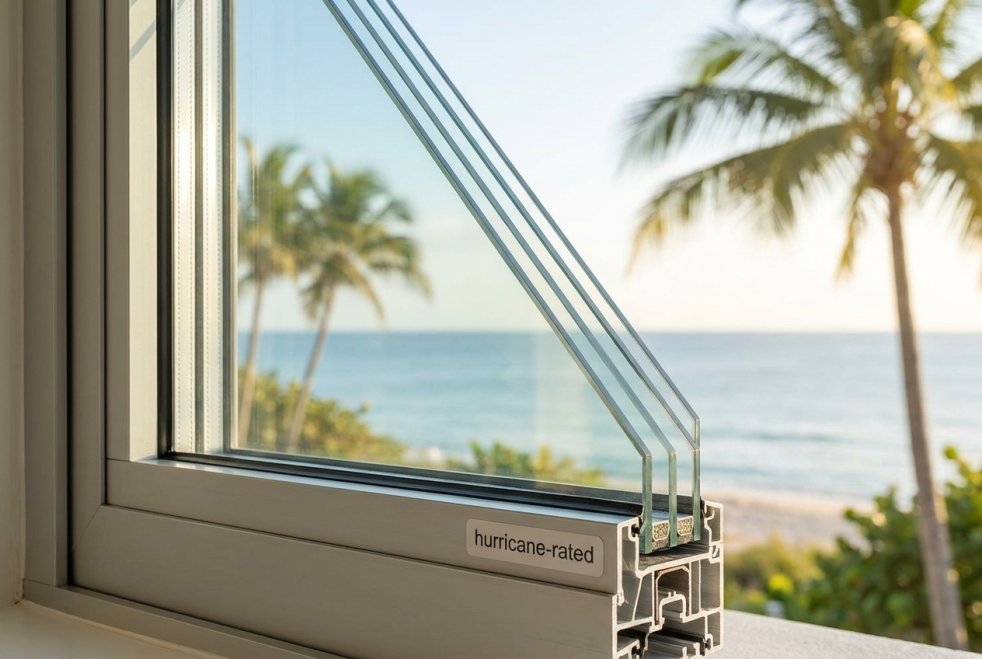
Impact Windows 101: What Makes a Window Hurricane-Rated in Florida
If you own a home or business in Sarasota, you already know that hurricane season is not something to take lightly. The Gulf Coast gets hit with some of the most intense storm systems in the country, and your windows are often the first line of defense.
But not every window marketed as "hurricane-resistant" is created equal. Understanding what actually makes a window hurricane-rated can help you make a smarter investment before the next storm rolls in.
What Does "Hurricane-Rated" Actually Mean?
A hurricane-rated window, often called an impact window, is engineered to withstand the extreme wind pressures and flying debris that come with major storm events. The term is not just a marketing label. In Florida, it carries a specific legal and technical meaning tied to building codes.
To be classified as hurricane-rated in Florida, a window must pass rigorous testing standards set by the Florida Building Code. These tests simulate real storm conditions, including high-velocity wind pressure and large missile impacts.
The Two Core Tests Every Impact Window Must Pass
Florida requires impact windows to pass two primary tests before they can be approved for installation:
- Large missile impact test: A nine-pound 2x4 lumber piece is fired at the glass at 50 feet per second to simulate wind debris
- Cyclic pressure test: The window is then subjected to repeated wind pressure cycles to simulate the sustained stress of a hurricane
If the window holds up through both tests without allowing air or water penetration, it earns its hurricane-rated designation. This is a much higher bar than a standard double-pane window.
What Is Laminated Impact Glass?
The glass itself is what separates a true impact window from a standard one. Impact glass uses a laminated construction, similar to a car windshield, where two layers of tempered glass are bonded to a strong interlayer of polyvinyl butyral (PVB) film.
When struck, the glass may crack, but the interlayer holds the pieces together. This prevents the window from shattering inward and keeps the building envelope sealed during a storm. A broken seal during a hurricane allows pressure to build inside the structure, which can cause catastrophic roof and wall damage.
Frame Material Matters Too
The glass is only part of the equation. The frame must also be engineered to handle the same forces. Most high-quality impact windows in the Sarasota area use frames made from:
- Heavy-gauge aluminum, which offers strength and corrosion resistance in coastal salt air environments
- Reinforced vinyl, which provides good insulation and resists moisture over time
A frame that flexes too much or pulls away from the wall during a storm defeats the purpose of the impact glass. Proper installation into a structurally sound opening is equally critical.
Florida Product Approval: What to Look For
In Florida, every impact window must carry a Florida Product Approval number before it can be legally installed. This number confirms the product has been independently tested and approved for use in the state.
When you hire a licensed contractor, they should be able to provide documentation showing the product approval number for every window being installed. If a contractor cannot produce this information, that is a red flag.
Impact Windows vs. Hurricane Shutters: Key Differences
Many Sarasota homeowners still rely on hurricane shutters as their primary storm protection. Shutters can be effective, but they come with some practical drawbacks compared to impact windows.
- Shutters require manual installation before each storm, which can be difficult for older homeowners or during fast-moving storms
- Impact windows provide protection year-round without any action required
- Impact windows also reduce noise, block UV rays, and improve energy efficiency on a daily basis
- Some insurance carriers offer premium discounts for homes with impact windows installed throughout
For many homeowners, the combination of storm protection and everyday benefits makes impact windows the more practical long-term choice.
Why Sarasota Homeowners Need to Take This Seriously
Sarasota sits in a high-velocity hurricane zone (HVHZ-adjacent region), and Sarasota County building codes reflect that reality. Homes within a certain proximity to the coast face even stricter requirements for wind-borne debris protection.
Even a Category 1 storm can send debris flying at speeds capable of penetrating a standard window. Once the building envelope is breached, interior damage escalates rapidly. Impact windows are one of the most effective ways to prevent that from happening.
Warning Signs Your Current Windows Are Not Storm-Ready
If you are unsure whether your existing windows provide adequate hurricane protection, watch for these signs:
- Single-pane glass or standard double-pane without laminated construction
- No Florida Product Approval documentation available
- Older aluminum windows with visible frame deterioration or corrosion
- Windows that rattle or flex noticeably in moderate wind
- No current storm protection plan beyond standard glass
Any of these situations is worth addressing before hurricane season peaks.
Talk to a Local Expert Before You Buy
Gulf Coast Windows and More, Inc has been helping Sarasota homeowners and businesses navigate impact window selection and installation for years. Choosing the right product for your specific home, location, and exposure level makes a significant difference in both protection and long-term value.
Not every impact window on the market is appropriate for every property, and installation quality is just as important as the product itself. Working with a licensed, experienced local contractor ensures the job is done to Florida code and done right the first time.
If you have questions about impact windows or want to schedule an evaluation for your Sarasota property, call Gulf Coast Windows and More, Inc today at (941) 271-9367. We are happy to walk you through your options and help you make a confident, informed decision.